
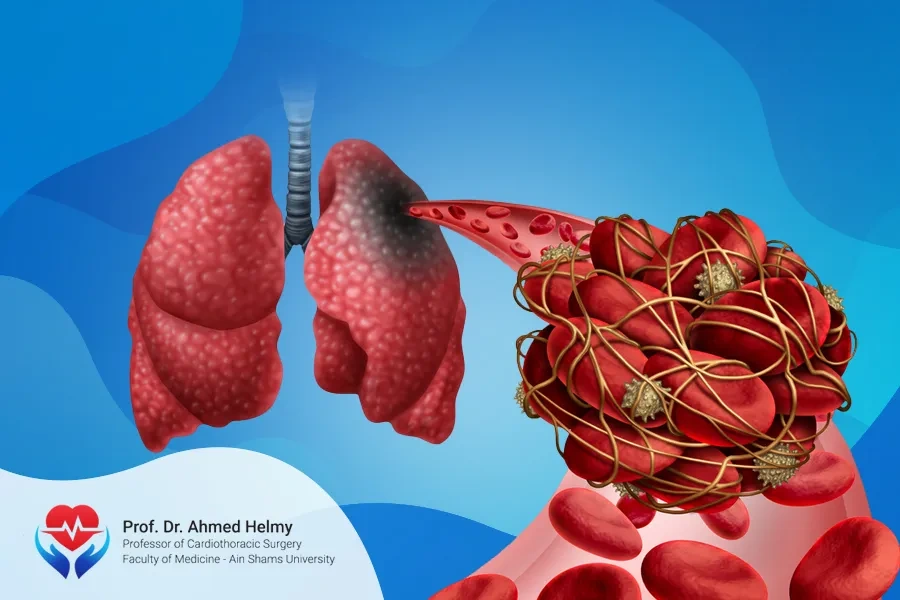
Pulmonary embolism treatment
The pulmonary artery carries blood from the heart to the lungs, and a pulmonary embolism can cause serious complications if its assessment and treatment are delayed. Urgent medical care is needed when worrying symptoms appear.
What is a pulmonary embolism?
The pulmonary artery carries blood from the heart to the lungs, and a pulmonary embolism can cause serious complications if its assessment and treatment are delayed. Urgent medical care is needed when worrying symptoms appear.
Choosing the right treatment starts with assessing the medical history and test results, and explaining the treatment options and steps that suit the patient's condition.
Symptoms of pulmonary embolism
The problems that may require intervention differ from one patient to another, and the doctor can determine the treatment options after the examination.
- Sudden shortness of breath or chest pain.
- A faster heartbeat or dizziness.
- Risk factors linked to blood clot formation.
- Choosing the right treatment according to severity and the medical team's assessment.
Causes of pulmonary embolism
The examination and procedure steps are set according to each patient's needs and condition.
- Clinical examination and review of the medical history.
- The tests and imaging needed to assess the condition.
- Discussing the treatment plan or the appropriate intervention with the patient.
- Performing the medical procedure when needed and following up afterwards.
How pulmonary embolism is diagnosed
The pulmonary artery carries blood from the heart to the lungs, and a pulmonary embolism can cause serious complications if its assessment and treatment are delayed. Urgent medical care is needed when worrying symptoms appear.
Follow-up with the doctor and adherence to the recommended instructions help in understanding the course of treatment and recovery. Results and steps vary from case to case according to tests and medical assessment.
Treatment and follow-up options
The pulmonary artery carries blood from the heart to the lungs, and a pulmonary embolism can cause serious complications if its assessment and treatment are delayed. Urgent medical care is needed when worrying symptoms appear.
Follow-up with the doctor and adherence to the recommended instructions help in understanding the course of treatment and recovery. Results and steps vary from case to case according to tests and medical assessment.
Frequently asked questions
When is a pulmonary embolism dangerous?
That depends on the patient's condition and test results; Prof. Dr. Ahmed Helmy decides whether the procedure is suitable and gives its specific instructions after the consultation.
How is the clot diagnosed?
That depends on the patient's condition and test results; Prof. Dr. Ahmed Helmy decides whether the procedure is suitable and gives its specific instructions after the consultation.
How can risk factors be reduced?
That depends on the patient's condition and test results; Prof. Dr. Ahmed Helmy decides whether the procedure is suitable and gives its specific instructions after the consultation.
To book or enquire at Dr. Ahmed Helmy’s center
Related articles
الفرق بين جلطة القلب والذبحة الصدرية: كيف تميز بينهما ومتى تذهب للطوارئ؟
ألم في الصدر… هل هو ذبحة أم جلطة؟ سؤال قد يتوقف عليه إنقاذ حياة. كثير من المرضى في مصر يستخدمون الكلمتين وكأنهما شيء واحد، أو يتأخرون في الذهاب للطوارئ ظنًا…
الرجفان الأذيني: الأسباب والأعراض وخطر الجلطات وطرق العلاج
«النبض عندك مش منتظم، ومحتاج تاخد دوا سيولة»… جملة يسمعها كثير من المرضى لأول مرة بعد رسم قلب روتيني. والرجفان الأذيني هو أكثر أنواع اضطراب نظم القلب المستمرة انتشارًا في…
عدم انتظام ضربات القلب: الأنواع والأسباب ومتى يكون خطيرًا؟
تحس فجأة أن قلبك «بيدق بسرعة» أو «بيقف لحظة» أو «بيرفرف» في صدرك؟ هذا الإحساس من أكثر الأسباب التي تدفع المرضى لزيارة طبيب القلب في مصر. وعدم انتظام ضربات القلب…